









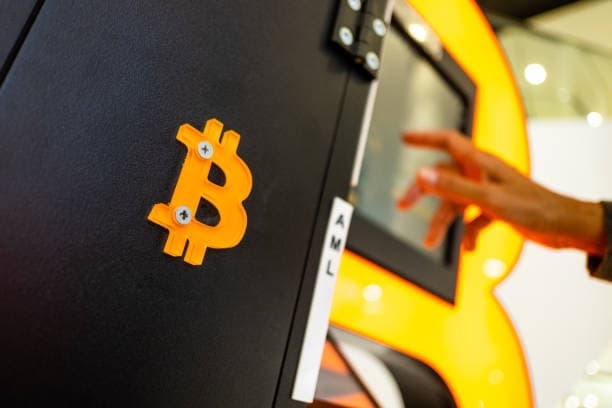
It’s a quirky saying, but it captures a fascinating relationship that’s been brewing for a while now. Let’s dive into the world of financial interconnectivity and see how these two seemingly disparate entities, Bitcoin and the stock market, are more entwined than we might think.
The Rise of Crypto-Correlations
Remember the days when Bitcoin was the wild child of finance, doing its own thing without a care for what the traditional markets were up to? Those days are long gone. Nowadays, Bitcoin’s price movements are often seen to mirror the stock market’s performance. It’s like they’re part of the same financial family, with Bitcoin being the rebellious teenager who’s starting to act more like its Wall Street parents.
Why is this happening? Well, it’s all about perception and reality. As Bitcoin grows in popularity and more institutional investors jump on the bandwagon, it’s becoming less of a rogue asset and more of a part of the mainstream financial ecosystem. This means that the same factors affecting stocksike economic indicators, market sentiment, and global eventsre now influencing Bitcoin as well.
Bitcoin as a Hedge? Not So Fast
For a while, there was a belief that Bitcoin could act as a hedge against stock market volatility. The idea was that if the stock market took a dive, Bitcoin would rise, providing a safe haven for investors. But recent trends have shown that this might not be the case. In fact, during times of market stress, Bitcoin often moves in tandem with stocks, suggesting that it’s not the閬块櫓 asset many hoped it would be.
This is partly due to the fact that Bitcoin, while still relatively new, is becoming more correlated with traditional assets. As it integrates into the financial system, its price movements are increasingly influenced by the same factors that affect stocks. So, when the stock market has a bad day, Bitcoin is likely to have a bad day too.
The Influence of Market Sentiment
Market sentiment plays a huge role in how both Bitcoin and stocks perform. When investors are feeling optimistic, they’re more likely to buy riskier assets, which includes both stocks and Bitcoin. Conversely, when they’re feeling bearish, they tend to sell off these assets, leading to a decline in both markets.
This is where the ‘herd mentality’ comes into play. When one market starts to move, investors often follow suit in the other, fearing they’ll miss out on gains or wanting to mitigate losses. It’s a cycle that can create a domino effect, with btc and stocks feeding off each other’s movements.
Bitcoin’s Role in Portfolio Diversification
Despite the increasing correlation, Bitcoin still has a place in a well-diversified portfolio. Its unique characteristics, such as decentralization and limited supply, set it apart from traditional assets like stocks. While it may not be the hedge it was once thought to be, it can still offer portfolio diversification benefits.
Investors who include Bitcoin in their portfolios are essentially adding a different kind of risk and return profile. This can help spread risk across a variety of assets, potentially leading to more stable returns over time. However, it’s crucial to remember that Bitcoin’s volatility is still much higher than that of stocks, so it should be included in moderation.
The Future of Bitcoin and Stocks
As we look to the future, the relationship between Bitcoin and the stock market is likely to continue evolving. With more mainstream adoption and regulatory clarity, Bitcoin could become even more integrated into the financial system, further strengthening its correlation with stocks.
On the other hand, if Bitcoin manages to establish itself as a standalone asset class, it might start to move more independently of the stock market. This would be a significant development, as it would mean that Bitcoin’s price movements are driven more by its own fundamentals rather than by the broader market sentiment.
Conclusion
In the world of finance, nothing is set in stone. The connection between Bitcoin and the stock market is a dynamic one, influenced by a myriad of factors. While they may seem to be moving in lockstep at times, it’s important to remember that each has its own unique characteristics and influences. As an investor, understanding these dynamics can help you make more informed decisions about where to place your bets. Whether you’re a Bitcoin bull or a stock market stalwart, keeping a close eye on this relationship is key to navigating the ever-changing landscape of finance.